Bulls vs Lakers and the NBA Playoffs 1992
Description 28.11.2026
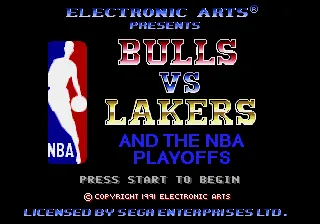
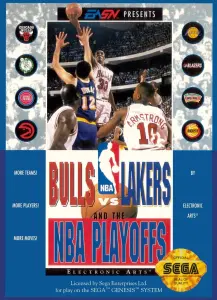
Bulls vs Lakers and the NBA Playoffs is a basketball simulation designed and programmed for the SEGA Genesis by Lisa Ching, Edwin Reich and Jeff Lefferts at Electronic Arts. It came out in North America in May 1992 under the EA Sports Network television brand, reached Europe in August, and Electronic Arts Victor released it in Japan in April 1993. A follow-up to Lakers versus Celtics and the NBA Playoffs, it carries the NBA licence and pays tribute to the 1991 Finals, in which the Chicago Bulls beat the Los Angeles Lakers 4-1.
Gameplay
The court is seen from the side, the screen scrolls with the ball, and for the first time in the series the team logos are painted on the floor. There are 16 teams from the 1990-91 playoffs plus the East and West All-Stars. It plays solo, with 2 players on the same team or against each other, as a single game or as the whole playoff bracket with series played to 4 wins, which an 8-character password saves and restores. Arcade mode knows neither fatigue nor fouls, while in Simulation the players tire and leave after their sixth foul. On the lowest level, Pre-Season, the referees are lenient and the opponents shoot with the precision of a bricklayer.
The player decides when to shoot, the game decides how: from the stats, the type of player and how tightly he is guarded it picks a dunk, a hook or a jumper. One star per team has his own marquee move that works only from a marked spot on the court: Jordan's "Air" Reverse, Barkley's Monster Dunk, Drexler's Gliding Tomahawk or Olajuwon's 360° Slam. Free throws are aimed with the T-Meter gauge, the pause opens an Instant Replay with frame-by-frame rewind, and at halftime of a tournament game the EASN broadcast shows the other scores and the stats.
In issue 10, the British MegaTech gave it 80 % and called it a very accurate simulation for hardcore basketball fans. The reviewers praised the graphics, the atmosphere and the wealth of options, but found it slower than the rival David Robinson's Supreme Court and, apart from the new modes and the stars' signature moves, not much different from its predecessor. Team USA Basketball by the same team followed later in 1992, and Bulls vs. Blazers and the NBA Playoffs after that.
The manual opens with a photo of the team in the stands and short profiles: programmer Lisa Ching, at 5 feet (152 cm) tall, is described as a natural guard who "still hasn't outgrown her position". The rosters are from the 1990-91 season, so when the game reached Europe in August 1992, 9 months after Magic Johnson had retired, MegaTech asked in a caption what he was doing in the Lakers line-up. The same magazine credited the sound to Rob Hubbard, although the manual names Mike Bartlow for music and sound.