Dungeons & Dragons: Shadow over Mystara 1996
Description 29.11.2026
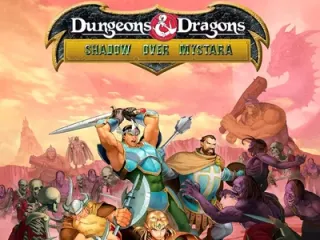
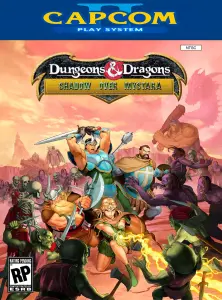
Capcom sent its second Dungeons & Dragons arcade game to Japanese arcades in February 1996, 2 years after Tower of Doom, and to North America and Europe later that year. It runs on the same engine and the same CPS2 board, and the Japanese flyer sells it as an action RPG, the 14th CPS2 game and chapter 2 of the series. The brand belonged to TSR, which the game credits right on its title screen. Up to 4 players share the cabinet again.
It is 2 years since the battle at the Sable Tower and the defeat of the arch-lich Deimos, and peace has returned to the Republic of Darokin. So the heroes set out through the Broken Lands for the land of Glantri in search of new adventures. On the way they learn that Deimos was only a pawn of the sorceress Synn, and that her designs on Darokin did not end with his fall.
Gameplay
The fighter, cleric, elf and dwarf are joined by a thief and a magic-user, making 6 classes, each in 2 versions so that 2 players can pick the same one. Defeated enemies give experience, and new levels bring new spells and abilities. Magic works as in the tabletop game: no mana, each spell has a handful of uses, and scrolls found on the way add more. Weapons, items and spells are picked from a ring menu, the thief spots trapped chests and the cleric turns undead. Towns have shops, and rare boss drops can be traded for magical gear. Magic boots, gauntlets and rings only last a few hits, though, so whoever wears them had better not get hit.
At forks the party picks its route and the game has several endings, so one run never shows all of it. Special attacks take a joystick motion plus a button, as in a fighting game, and the magic-user can find the Staff of Wizardry in a hidden chest. Underneath it is still a brawler in the vein of Final Fight, only with a richer palette and smoother animation than the first game. The characters were designed by Kinu Nishimura and the music was composed by Masato Koda.
Reception and legacy
Next Generation 16 (April 1996) gave the game 3 stars out of 5. It credited the same team on the same engine with improving everything, from animation on a par with Street Fighter Alpha to the new characters and more routes, endings and magic items. In its view it was still a basic side-scrolling brawler, but digital D&D fans would eat it up. In 1999 both games came out in Japan on the Sega Saturn as Dungeons & Dragons Collection, for 2 players only. In 2013 they were reissued as Chronicles of Mystara for PlayStation 3, Xbox 360, Wii U and Windows.
The story was again written by Alex Jimenez of Capcom USA. Where Tower of Doom still named SSI on its opening screen, this game credits the licence to TSR directly. Mystara was not new to players either: the PC strategy game Fantasy Empires had used the same world 3 years earlier.